

Last Updated: 10 November 2026
Quick Summary
Flexible business storage is space you can rent on terms that suit your needs, such as short-term hire, adjustable unit sizes or lease periods that change with your business. To find it near Callington, measure your stock and access needs, compare total costs, and check vehicle access before signing.
-
Plan storage for the next 12 months, since moving premises mid-year costs time and money.
-
Compare total cost including deposit, service charge, rates, utilities and transport, not just headline rent.
-
Measure your largest regular vehicle and check turning space on site before committing.
-
Florence Road Business Park offers mixed-use units from 275 to 6,000 sq ft near Callington.
-
Get written quotes stating the term, and have a solicitor check the lease before you sign.
**Need flexible business space near Callington?**Florence Road Business Park offers workshops, storage and offices with roller-shutter access and CCTV security.
Table of Contents
-
Finding Short Term Warehouse Space Cornwall Businesses Can Use
-
Comparing Business Storage Costs Across OptionsBuild a like-for-like cost sheet
-
Reviewing a Commercial Unit Lease ChecklistStandard terms to confirm
-
Choosing Warehouse Space for Small Businesses and Booking a Viewing
Finding flexible business storage in Cornwall can feel harder than it should. Many businesses need space that grows and shrinks with their stock, equipment or workload, but the options vary a lot in terms of access, security and cost. This guide walks through a practical way to find and compare business storage near Callington, so you can make a clear decision with confidence.
Flexible business storage is usually defined as space you can rent on terms that suit your needs, such as short-term hire, adjustable unit sizes or lease periods that change as the business does. The aim is to avoid paying for more space than you use, or being stuck with too little.
Work Out How Much Space and Access Your Business Needs
Start by listing what you actually need to store and how often you need to reach it. A unit used once a month for archived documents has very different requirements from one where a team loads and unloads stock every day.
Most businesses should check three things before looking at any unit:
-
Volume: how much stock, equipment or files you hold, measured in square feet
-
Access frequency: how often staff or couriers need to get in and out
-
Vehicle needs: whether vans or lorries must drive up to the door
A common mistake is choosing based on the current stock level alone. Plan for the next 12 months, because moving premises mid-year costs time and money.
Finding Short Term Warehouse Space Cornwall Businesses Can Use
Short-term warehouse space suits businesses with seasonal demand, a temporary contract, or a move that has not yet happened. Look for units let on flexible terms rather than a fixed multi-year lease.
When you search, compare these points for each option:
-
Minimum rental period and notice needed to leave
-
Whether you can change unit size later
-
Whether utilities, parking and business rates are included or extra
Florence Road Business Park offers mixed-use units from 275 to 6,000 sq ft, suitable for workshops, storage or offices. You can explore the available units to let at Florence Road Business Park to see what matches your size needs.
Checking Access, Delivery and Loading Requirements
Access is often the deciding factor for business storage, yet many businesses only check it after signing. Look at the route a delivery vehicle would take, not just the address on the map.
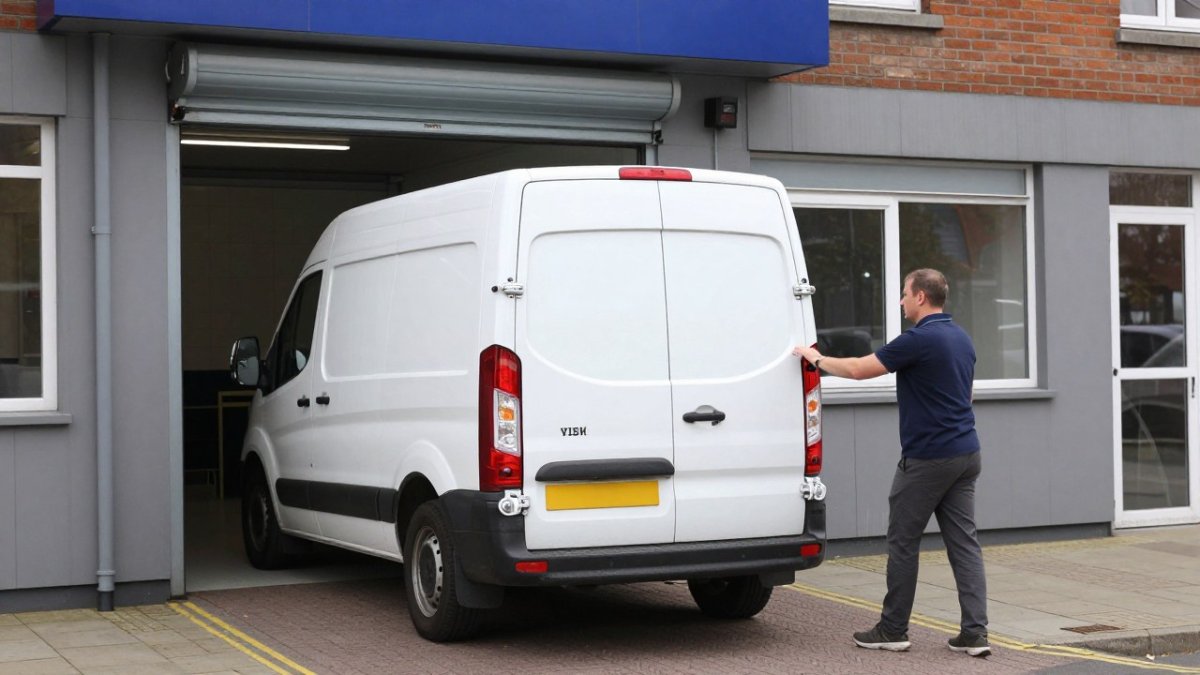
Worker guiding a delivery van to a roller-shutter door at a flexible business storage unit
Key questions to ask:
-
Can your largest regular vehicle turn in the yard or access road?
-
Is there a roller-shutter door wide and high enough for your goods?
-
Will peak-hour traffic slow deliveries or collections?
-
Is there space to load and unload without blocking other tenants?
Florence Road Business Park is located just off the A388 near Callington. You can check the location and how to reach the park before arranging a visit.
Watch out: Do not assume a unit described as "accessible" will suit articulated lorries. Measure your vehicle and check the turning space in person.
Comparing Business Storage Costs Across Options
Headline rent is the easiest number to compare and the least useful on its own. Two units advertised at the same monthly figure can differ in total cost once deposits, service charges, insurance and transport are added. The practical approach is to build a total-cost comparison for each option rather than comparing rents in isolation.
Build a like-for-like cost sheet
For each facility on your shortlist, record the same lines in the same order so nothing is hidden by a different quoting style:
-
Base rent for the exact unit size you need, quoted per month and per square foot
-
Deposit, how much, whether it is refundable, and what conditions apply to its return
-
Service charge or estate charge, what it covers and whether it is fixed or reviewed
-
Business rates, whether the unit is separately assessed or rates are included in the rent
-
Utilities, whether power and water are metered, sub-metered or bundled
-
Insurance, whether the landlord's policy covers your goods or you must arrange your own
-
Access charges, any fee for out-of-hours access, additional keys or fobs, or barrier cards
-
Parking and loading, whether spaces are allocated, shared or charged per vehicle
-
Transport, the round-trip mileage and time from your operating base, costed at your own vehicle rate
A common pattern is for the cheapest headline rent to lose on total cost once transport and access charges are added, particularly if the site is further from your customers or suppliers.
Ask for the quote in writing, with the term stated
Pricing varies with unit size, term length and what is included, so ask each provider for a written quote that lists every charge and states the term it applies to. A quote for a twelve-month term is not comparable with one for a rolling monthly agreement, because the shorter term usually carries a higher monthly rate in exchange for flexibility.
Watch out: a rent quoted "plus service charge" can look competitive until the service charge is added, so insist on the all-in monthly figure before you compare options side by side.
Factor in the cost of change
Flexibility has a price of its own. If you expect to grow or shrink within the year, compare what each provider charges to move units, add space or leave early. Some operators allow a straightforward unit transfer; others treat it as a surrender and re-grant, which can trigger new fees and a new minimum term.
For current pricing, please contact Florence Road Business Park for a quote based on your requirements and term.
The table below sets out the cost lines to record for each option so that quotes can be compared on the same basis.
Cost line | What to check | Why it matters |
Base rent | Per month and per square foot | Headline figure for comparison |
Deposit | Refundable and return conditions | Upfront cash outlay |
Service charge | Fixed or reviewed | Can raise the true monthly cost |
Business rates | Separate or included | Often an extra liability |
Utilities | Metered, sub-metered or bundled | Affects running costs |
Insurance | Landlord's policy or your own | Determines goods cover |
Access charges | Out-of-hours and fobs | Hidden recurring fees |
Transport | Round-trip mileage and time | Can outweigh a lower rent |
Security and Insurance Checks Before You Commit
Protecting stored stock and equipment matters as much as price. Ask each provider how the site is secured and what it covers.
Check for:
-
CCTV coverage of the yard and entrances
-
Controlled access, such as a key code or fob system
-
Lighting and perimeter fencing
-
Whether your own insurance covers goods held on site
If you have lost tools or equipment before, ask to see how the CCTV is monitored and stored, and whether the system is actively in use. Do not rely on the description alone.
Reviewing a Commercial Unit Lease Checklist
A commercial lease is legally binding, so it is wise to have a solicitor or adviser check the terms before you sign. Beyond the standard clauses, there are practical questions that decide whether a unit actually works for your business, and they are easier to resolve before signature than afterwards.
Standard terms to confirm
-
Lease length and any break clause, including the date the break can be exercised and the notice required
-
Notice period to end the agreement at the end of the term
-
Rent review dates and the mechanism used to calculate any increase
-
Repair and maintenance responsibilities, including who maintains the roof, structure and external areas
-
Permitted use, whether storage, workshop, office or a combination is allowed, and whether that use is restricted
-
Parking rights and loading access, including any allocated spaces
-
Insurance requirements and who is responsible for what
Practical questions to ask before signing
-
What goods are prohibited? Flammable liquids, gas cylinders, certain chemicals and some foodstuffs are commonly excluded. Confirm in writing that your stock is permitted, particularly if you store aerosols, solvents or batteries.
-
What insurance evidence is required? Ask whether you must name the landlord on your policy, what level of cover is expected, and whether the landlord's own policy covers the building only or your contents as well.
-
How is access controlled in practice? Confirm the hours you can access the unit, how keys or fobs are issued, what happens if you lose one, and whether out-of-hours access carries a charge.
-
What is the exit process? Ask what condition the unit must be returned in, whether you must remove alterations, and what the deposit return conditions are.
-
Who is the point of contact for day-to-day issues? Confirm whether there is an on-site manager or a remote contact, and how maintenance requests are raised.
Check the small print on flexibility
A common question is what happens if the space does not suit you. Look for a break clause or a short initial term, which reduces the risk of being locked in. Read the break clause carefully: some require notice months in advance and a payment of rent up to the break date, and a break right can be lost if you have breached any obligation under the lease.
Watch out: a verbal assurance that you can "leave any time" is not a break clause. If flexibility matters, have the exit terms written into the agreement before you sign.
Choosing Warehouse Space for Small Businesses and Booking a Viewing
Warehouse space for small businesses should match your daily operations, not just your storage volume. A workshop needs power and room to work, while a storage unit mainly needs secure access.
Before you book a viewing, prepare a short list:
-
Your required unit size and access needs
-
Your delivery vehicle sizes and typical visit times
-
Questions about security, parking and lease terms
-
Your budget and the costs you want included
Bring your list when you visit. A viewing lets you test access, see the security in person and ask questions you may have missed online. To arrange one, get in touch with Florence Road Business Park and book a viewing at a time that suits your team.
Finding the right flexible business storage takes a clear view of your space, access and total costs. Florence Road Business Park provides adaptable units near Callington, with roller-shutter access, CCTV security and on-site parking.
Frequently Asked Questions
What should I look for in business storage?
Start with the things you cannot change later: unit size, access hours, vehicle access, security and the lease terms. Check whether the space is dry, ventilated and suitable for what you store, such as stock, tools or documents. Ask whether CCTV is monitored or only recorded, and whether there is on-site parking for staff and visitors. Compare the total monthly cost, including parking, VAT and any service charges, rather than the headline rent alone.
How much business storage space do I need?
Measure your current stock, equipment and shelving, then add roughly 20 to 30 per cent for access aisles, loading and future growth. Remember that items need walking room, not just floor area. If you need to load a van or lorry directly, confirm the roller-shutter width and door height as well as the floor area. Flexible units let you step up or down in size as your needs change.
Can businesses rent storage for a short term?
Yes, many providers offer short-term and flexible rental terms, sometimes on monthly rolling agreements. Short-term use suits seasonal stock, project work or a temporary expansion. Confirm the notice period, the minimum term and whether there is an early exit fee. Shorter terms usually cost more per square foot than long leases, so weigh the flexibility against the price difference.
What should I ask before signing a business storage agreement?
Ask what is included in the rent, what is charged separately, and what happens at the end of the term. Check the notice period, whether the agreement is a lease or a licence, and who is responsible for repairs and insurance. Ask to see the CCTV coverage and the access arrangements in writing. Request a copy of the full terms before you pay any deposit.