
Last Updated: October 25, 2026
Quick Summary
To secure warehouse space for seasonal stock, calculate your peak pallet and shelving footprint, then add 40% to 60% for aisles and working space. Choose a short-term or rolling rental over a full lease if your peak runs under four months, and confirm security, access and break clauses in writing before signing.
-
Ten pallets stacked two high need about six square metres of floor before anything else.
-
A 10-metre run of 600mm-deep racking eats six square metres of floor.
-
If your peak runs under four months, flexibility usually wins over a full lease.
-
Compare the total monthly outlay, not the advertised rent, once rates and service charges land.
-
Book delivery slots early and mark out floor zones before the first pallet arrives.
Table of Contents
-
How to Calculate Warehouse Space Needed for Your Peak StockWorking Out Pallet and Shelf Footprints
-
Your Warehouse Lease Checklist Before SigningSecurity, Access and Break Clauses
Why Seasonal Stock Needs Its Own Storage Plan
Seasonal stock is inventory you hold for a defined trading window, such as Christmas, summer events or back-to-school, rather than all year round. It creates a storage problem that a permanent lease never solves well: you need warehouse space for seasonal stock for six to twelve intense weeks, then you need it gone.
At Florence Road Business Park, we see this pattern constantly. A business outgrows the spare room or the garage, rents a full-time unit, then pays for empty floor for the other ten months.
Here is the core tension. Your peak stock needs room to breathe. Your off-peak stock needs to cost almost nothing. Most storage decisions fail because they solve one and ignore the other.
So plan the calendar before you plan the space. Map your intake weeks, your dispatch weeks and your clearance weeks. Everything below flows from that.
How to Calculate Warehouse Space Needed for Your Peak Stock
The simplest way to calculate warehouse space needed is to work from pallets and shelves up, not from a rough guess at floor area. Measure your peak pallet count, add your racking footprint, then add circulation space on top.
Most people underestimate by a wide margin because they forget the gaps. Let's fix that.
Working Out Pallet and Shelf Footprints
Start with your largest expected delivery. Count the pallets, then note how high you can safely stack. A standard pallet footprint is roughly 1.2 metres by 1 metre, so ten pallets stacked two high need about six square metres of floor before anything else.
For shelving, measure the run length and depth, not the shelf count. A 10-metre run of 600mm-deep racking eats six square metres of floor. Write both numbers down.
Allowing for Aisles, Packing Benches and Access
Then add the working space:
-
Aisles wide enough for a pallet truck or forklift
-
A packing bench of at least 2 metres
-
Clear space in front of the roller-shutter door
-
A quarantine area for returns and damaged goods
-
A walkway for safe staff movement
As a rule of thumb, circulation and working space add 40% to 60% on top of pure storage footprint. If your stock calculation gives you 60 square metres, you probably need 90 to 100 square metres of unit.
Watch out: sizing on storage footprint alone is the single most common mistake, and it leaves you stacking boxes in the doorway by week three.
Here are the key measurements and allowances to work through when sizing a unit for your peak stock.
Item | Value | Note |
Standard pallet footprint | Roughly 1.2 metres by 1 metre | Ten pallets stacked two high need about six square metres |
Shelving footprint | 10-metre run of 600mm-deep racking | Eats six square metres of floor |
Circulation and working space | 40% to 60% on top of storage footprint | 60 square metres of stock means 90 to 100 square metres of unit |
Packing bench | At least 2 metres | Add clear space in front of the roller-shutter door |
Choosing Short-Term Warehouse Space Over a Full Lease
Short-term warehouse space is a flexible rental arrangement, typically rolling month to month or fixed for a few months, rather than a multi-year commitment. It suits seasonal peaks because you pay for the weeks you actually need.
A full lease makes sense when stock is steady all year. It rarely makes sense for a Christmas surge.
The trade-offs are plain:
-
Short-term: higher flexibility, less commitment, usually a shorter notice period
-
Full lease: lower monthly rate over time, but you carry the cost through quiet months
If your peak runs under four months, flexibility usually wins. You can explore units on Florence Road Business Park to see what short-term space actually looks like before you commit to anything longer.
What Warehouse Rental Costs Actually Cover
Warehouse rental costs vary by unit size, term length and what the landlord includes, so ask for a full breakdown rather than a headline figure. Pricing depends on the unit, the term and the extras, so request a quote for your specific needs.
[Book a viewing →](https://florenceroadbusinesspark.com)
Ask every provider these questions before comparing:
-
Are business rates included or billed separately?
-
What are the service charges, and what do they pay for?
-
Is on-site parking included in the rent?
-
Who pays for building insurance?
-
Are utilities metered to the unit?
-
What is the deposit, and when is it returned?
Two quotes at the same headline rent can differ sharply once rates and service charges land. Compare the total monthly outlay, not the advertised number.
You can review what the park and its units include to see how inclusions change the real cost.
Your Warehouse Lease Checklist Before Signing
A warehouse lease checklist is a fixed set of terms you confirm in writing before signing, covering security, access, exit and cost. Run through it line by line. Verbal assurances are worth nothing once the ink dries.
Security, Access and Break Clauses
Confirm these in the agreement itself:
-
CCTV coverage and who monitors it
-
Lock and key control, plus who holds spares
-
Alarm responsibility and callout arrangements
-
24-hour access, or defined hours
-
Roller-shutter operation and maintenance duty
-
Break clause dates and notice period
-
What happens if the space does not work out
-
Repair and decoration obligations
-
Parking allocation in writing
That break clause matters most. If you sign a three-year term with no exit, a bad fit becomes an expensive one. Get the notice period in writing and diarise the date.
Preparing the Unit for a Seasonal Stock Influx
Preparation starts before the first pallet arrives. Book your delivery slots early, mark out floor zones with tape, and set up racking before stock lands. A unit organised on day one stays organised in week six.
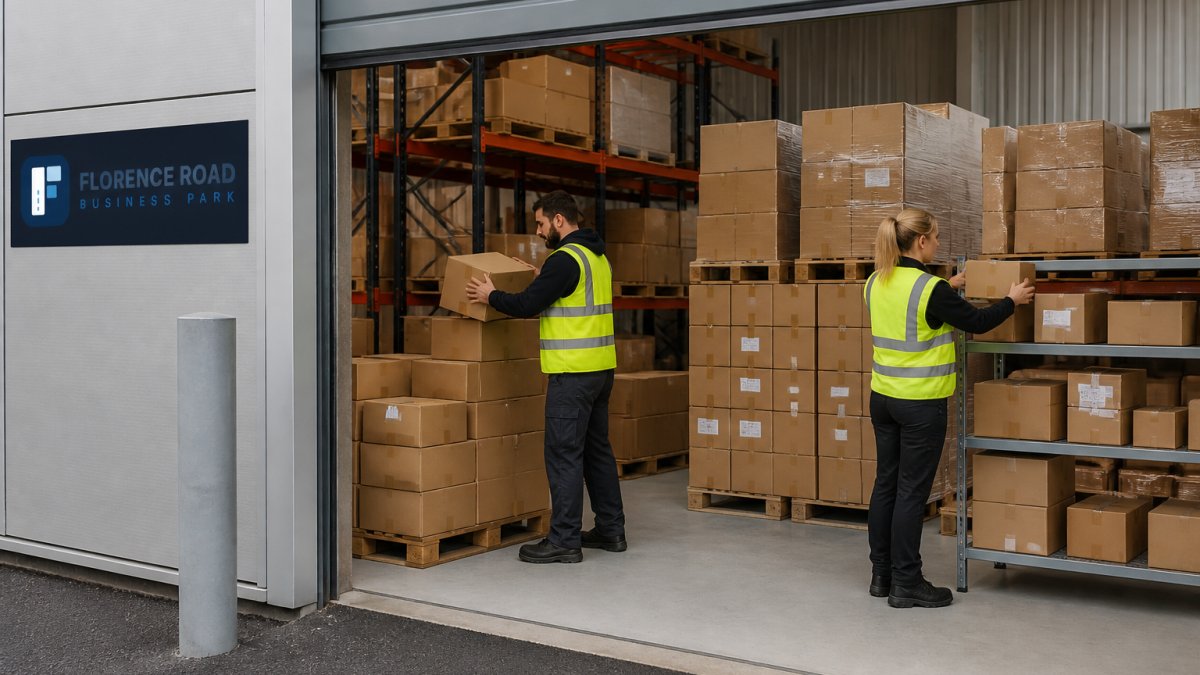
A warehouse unit with roller-shutter door open, stacked cardboard boxes on pallets and shelving being organised by two workers in high-visibility vests
Then work through this:
-
Zone the floor: intake, pick face, packing, dispatch, returns
-
Label every bay and shelf position
-
Test the roller shutter and alarm before peak week
-
Confirm delivery access and turning space for lorries
-
Brief staff on the layout and safe stacking limits
Check the location and access details so your carriers know exactly where to go during your busiest weeks.
Book a Viewing at Florence Road Business Park
The fastest way to settle a storage decision is to stand in the unit. Measurements on paper rarely match the feel of a space, and access is easier to judge in person than from a description.
Florence Road Business Park offers mixed-use units from 275 to 6,000 sq ft, just off the A388 near Callington. Every unit has roller-shutter access, CCTV security and on-site parking. That mix suits seasonal stock well: enough room for a peak, without a full-year commitment you do not need.
Bring your pallet count, your peak dates and your questions. We will walk you through the options and be straight about what fits.
Arrange a viewing through our contact page and see the space for yourself.
Frequently Asked Questions
How much warehouse space do I need for seasonal stock?
Start with your peak stock figure, not your average. Measure the footprint of a full pallet or shelving bay, multiply by the number of units you expect at the busiest point, then add roughly 30 to 40 per cent for aisles, packing benches and access. A unit of around 275 sq ft suits a small e-commerce operation storing a few pallets, while larger seasonal volumes need proportionally more room. Always size for the peak week, because that is when you will run out of floor.
Can I rent warehouse space for a few months?
Yes, short-term warehouse space is widely available and suits seasonal stock well. Terms vary by provider, so ask upfront about the minimum period, notice required to leave and whether the agreement rolls over automatically. A short-term arrangement keeps you flexible if the season is quieter than expected, but check what happens to your rate if you extend. Get the start and end dates in writing before you move stock in.
What should I check before leasing a warehouse for seasonal stock?
Work through a warehouse lease checklist: confirm the floor area in square feet, the security arrangements including CCTV coverage, loading and access hours, parking for your team and deliveries, and who pays for utilities and insurance. Ask about break clauses and what notice you must give. Visit at peak delivery time to see how easily lorries turn and unload, and confirm the unit has roller-shutter access if you handle pallets.
What costs should I budget for when renting warehouse space?
Warehouse rental costs go beyond the headline rent. Budget for business rates, utilities, insurance for stored goods, and any service charge on shared areas. Factor in racking or shelving, pallet trucks, and security if the unit is not already covered by CCTV. Ask the provider which of these are included and which are extra, and get the full picture in writing before you commit. Pricing depends on unit size, term and location, so request a quote.
Seasonal stock punishes guesswork. Size it from pallets, check the lease terms properly, and choose flexibility when your peak is short. If you want a unit that handles the surge without tying you down all year, get in touch with Florence Road Business Park and book a viewing.
[Book a viewing](https://florenceroadbusinesspark.com)